Be Seen. Be Understood. Be Ready for What’s Next.
Something has shifted in social media, and it is worth understanding before you notice it in your reach.
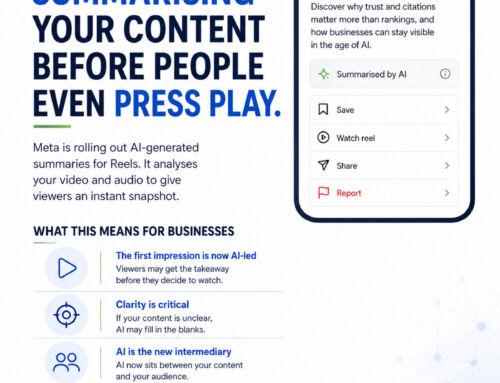
For years the job was to create content that catches attention, and that still matters. What has changed is that your post now has a second reader, and that reader is not a person. Platforms like Meta and Instagram use artificial intelligence to work out what a post is about, categorise it, and decide who should see it. All of that happens before a single human scrolls past.
So what does that mean for your business? It means clarity is now doing work that cleverness used to do on its own. When a post says plainly what it is about, who it is for and why it matters, you give the AI something solid to work with, and you give your audience exactly the same thing. The two audiences want the same clarity, which is the part most people miss.
We see this often at Net Branding. The businesses that struggle here are rarely the ones posting badly. They are the ones posting vaguely, where a lovely image carries a caption that could belong to any business in the country.
The future of social media is not only about being visible. It is about being understood.
Be seen. Be heard. Be found, trusted and cited online.
AI Is Changing Social Media. Here Is What It Means for Your Business.
Author: Cathy Mellett, Founder and Managing Director, Net Branding Status: Ready for review. Placeholders marked in square brackets must be filled before publication.
What has actually changed, in plain terms
If you take one idea away from this article, make it this one.
Social platforms used to work on a fairly simple promise. You built a following, you posted, your followers saw it. That is follower based distribution, and reach was roughly a function of how many people had chosen to follow you.
Distribution is now interest-based. Platforms decide who sees a post according to what the system believes that person is interested in, whether or not they follow you. TikTok made this model famous, and Meta, Instagram and LinkedIn have all moved a long way in the same direction.
From followers to interests
The technical term is a recommendation system. In practice it means the platform is constantly forming a view about two things: what each of your posts is about, and what each individual user wants to see. Then it tries to match them.
Your content now has a second reader
Most business owners have not been told this, and it changes how you write a post: the systems reading your content are no longer only reading your words.
For years the working assumption was that the caption was the part the platform understood and the image was the part people looked at. That assumption is out of date. The term for what changed is multimodal understanding, which simply means the systems now interpret images, video, audio and text together rather than treating the caption as the only readable part.

The slop problem, and why it works in your favour
You have probably noticed feeds filling up with content that feels somehow hollow. Technically fine, oddly generic, clearly made at speed and in volume.
There is a name for it now. The BBC reported in February 2026 on what has become known as AI slop, and on the backlash building against it. Audiences are getting much better at spotting content that nobody really made, and much less patient with it.
This is really great news for your business. But you may be asking why.
When the cost of producing passable content falls to almost nothing, passable content stops being worth anything. What becomes scarce is the thing that cannot be churned out at volume. Actual knowledge of your trade. Real examples from real jobs. An opinion that came from doing the work rather than from summarising somebody else’s post.
I do not want to oversell this. Being authentic does not solve distribution on its own, and a lovely post that nobody can categorise will still reach very few people. The two things work together. Clarity gets you delivered. Substance makes the delivery worth something.
That is how we work at Net Branding, and it is why our line has always been AI driven capability with human judgement. The capability handles the scale. The judgement decides what is worth saying.
Consistency is doing more work than you think
Answer this one honestly. If somebody read your website, your Instagram bio and your LinkedIn page, would they conclude they were looking at the same business?
For a surprising number of businesses, the answer is not quite. The website says one thing, the profiles say something slightly different, and the posts describe the work in a third way. Each version is accurate. Together they are blurry.
So why does that hurt you now, when it never used to? Because the systems interpreting your content are trying to build a consistent picture of who you are, what you do and where you operate. That consistency has a name, entity clarity, and it is becoming one of the quieter deciding factors in how confidently a business gets recommended. When your own material disagrees with itself, the picture stays vague, and vague businesses get recommended less confidently.
The fix is unglamorous and it works. Decide how you describe your business in one sentence. Then use that same description, in the same words, on your website, in every profile, and in the way you talk about your work in posts. Same business name, same service language, same location.
There is a technical layer to this too, called structured data, which is code on your website stating these facts in a format machines read directly, using the shared vocabulary published at Schema.org. Worth doing, and a job for whoever looks after your site. It is not a prerequisite for anything above.
Where this is heading, and why social now feeds AI search
Something else is happening, and it changes how much your social content is worth.
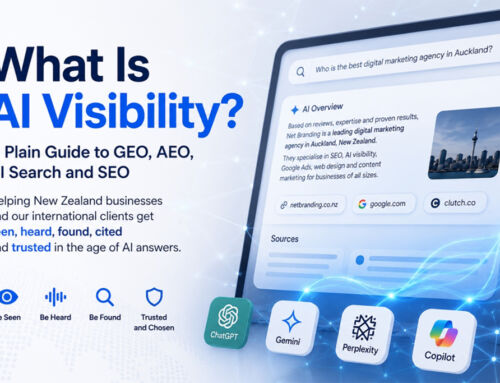
When somebody asks an AI assistant to recommend a business like yours, the answer gets assembled from what those systems have read about you across the web. Social profiles and posts form part of that picture, alongside your website, your listings, and what other people have written about you.
Let me be precise about the limits of what is known here, because plenty of people are not. The platforms have confirmed a great deal about how their own recommendation systems work. Exactly how AI assistants weight social content when forming an answer is far less transparent, and anyone claiming precise knowledge of it is guessing. What is clear is the direction of travel. Content that plainly states what a business does, for whom, and where, is easier for any system to use, whether that system is ranking, recommending or citing.
So the work in the last two sections does double duty. Writing clearly for your audience improves your reach today, and it improves the odds that when an AI assistant gets asked who to recommend in your field, it has something clear to work with.
If you want to go further into that side of things, our work on AI search visibility covers it in more depth, and I wrote about it at greater length in Be Found. Be Cited. Be Trusted.
Frequently asked questions
Why has my Instagram reach dropped when I am posting the same as always?
Probably because distribution changed, not your content. Platforms now decide who sees a post based on what each person seems interested in, rather than simply delivering it to your followers. If the system cannot tell what a post is about, it cannot match it to anybody, and the post quietly goes to fewer people. Clearer captions and clearer visuals usually win a decent share of that back.
Does AI actually read my images, or only my captions?
Both, and that surprises most people. The systems now interpret images, video, audio and text together. So the platform is forming a view about what is in your photo, what happens in your video, what text sits on screen and what is being said out loud, then combining all of it with your caption. Alt text and on screen text simply make that job easier.
Will using AI to write my posts hurt my reach?
Using AI is not penalised on its own. What performs badly is generic content, no matter who or what wrote it. When passable content costs almost nothing to produce, passable content stops being worth much, and audiences have got quick at spotting it. AI is genuinely useful for drafting and for scale. The knowledge of your trade still has to come from you.
Will using AI to write my posts hurt my reach?
Using AI is not penalised on its own. What performs badly is generic content, no matter who or what wrote it. When passable content costs almost nothing to produce, passable content stops being worth much, and audiences have got quick at spotting it. AI is genuinely useful for drafting and for scale. The knowledge of your trade still has to come from you.
Do I need to be on every platform now?
No, and spreading yourself thin usually makes everything weaker. Because distribution is interest based rather than follower based, a clear consistent presence on one or two platforms where your customers actually are will beat a vague presence on five. What matters more than the number of platforms is saying the same thing about your business across all of them.
Does my social media affect whether AI tools mention my business?
No, and spreading yourself thin usually makes everything weaker. Because distribution is interest based rather than follower based, a clear consistent presence on one or two platforms where your customers actually are will beat a vague presence on five. What matters more than the number of platforms is saying the same thing about your business across all of them.