Your customer journey at a glance
- Finding you. Make your services and location easy to find.
- Assessing your service. Explain what you offer and show relevant reviews and examples.
- Making an enquiry. Explain the first step and make contact straightforward.
- Choosing you. Answer questions about suitability, price, availability and what happens next.
Check the evidence behind an agency’s claims before committing more marketing budget.
What does a new customer actually see?
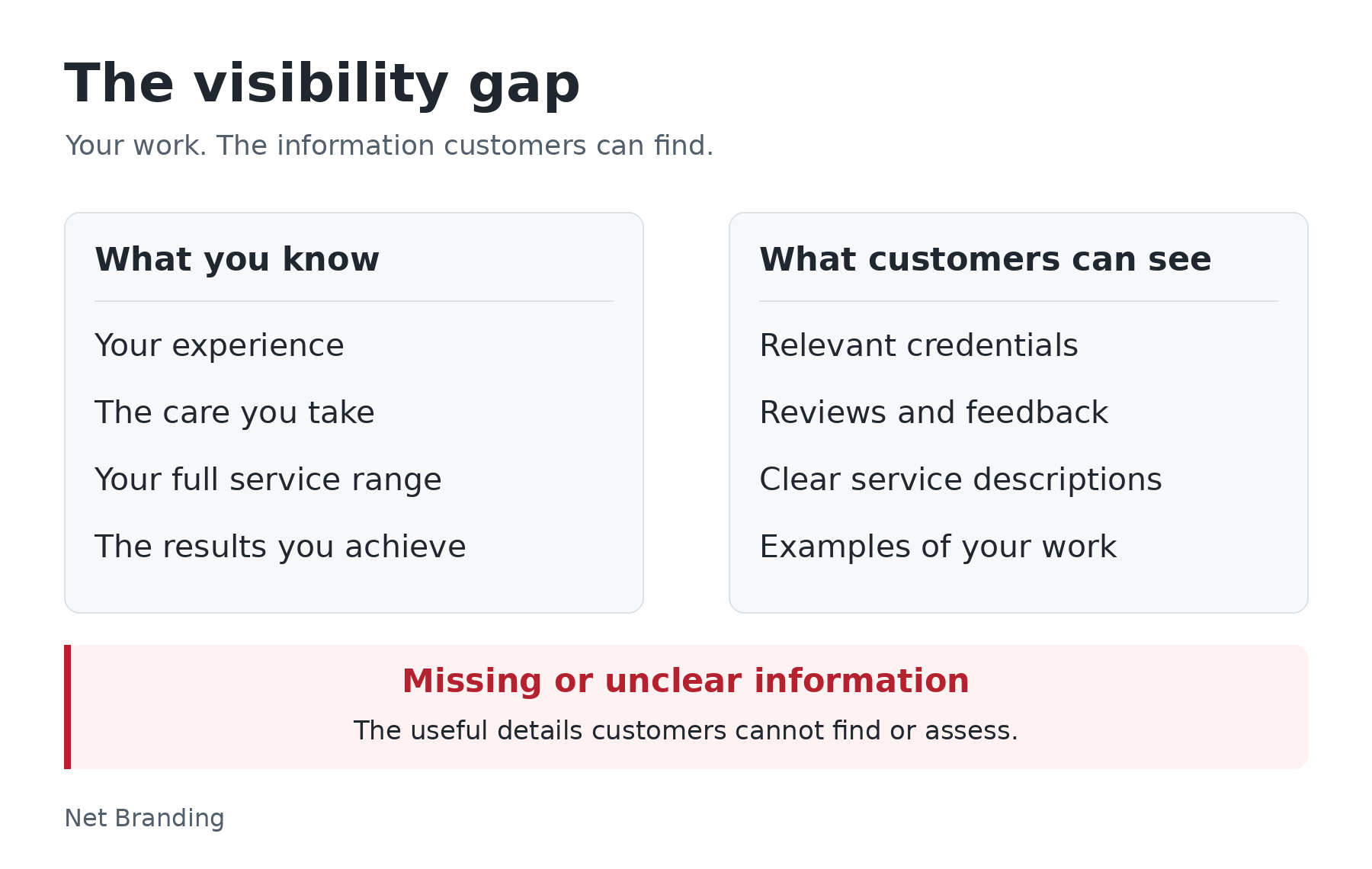
Start with someone who knows nothing about your business. They cannot see the care you take behind the scenes or the years of experience behind your advice. They have your website, reviews, recommendations and whatever else they find about you.
Imagine a homeowner with a leaking pipe. One plumbing website says the team is reliable and professional. Another explains which problems they handle, where they work and what happens when you call. It includes feedback from customers who needed similar help.
That homeowner still has to judge who can do the job. The second business has given them more information to make the decision, including answers to the immediate questions: can you help me, and what happens next?
The same applies to digital marketing. Saying “we do SEO” names a service. A business owner also wants to understand which enquiries that work is intended to support and how progress will be assessed.
Read your own main service page with that in mind. Does it explain the problem you help solve, what the service includes and what the customer can expect? If it could belong to any competitor with the name changed, it needs more detail about your work.
Our website content support at Net Branding helps turn those details into service pages and articles customers can use when deciding who to contact.
Being known doesn’t mean people know all your services
An existing customer might know you for one part of your work and contact someone else for a service you also provide. They may simply never have associated that service with you.
This is a reason to keep explaining what you do, even when your business has been around for years. Share a relevant job, answer a question customers ask or explain a service they might have overlooked. Keep the details consistent across your website, advertising and social channels.
You don’t have to post constantly. Choose the places your customers use and give them something useful to remember. A clear example of your work can say more than another general statement about great service.
If keeping that communication going is difficult alongside running the business, Net Branding can help with your social media.
Give people evidence they can check
Once someone finds you, they need reasons to trust what you say. “Excellent service” might be accurate, but a reader cannot assess much from those words alone.
A review that explains the customer’s problem, how you responded and what happened next gives them more to consider. Ask for honest feedback and reply to it. Your responses show how you communicate, including when someone raises a concern. Net Branding offers review and reputation support if you need help managing that process.
Use examples of your work as well. A case study can describe the situation, the work you carried out and the result. Include figures where you can support them, and explain any limits that would affect the comparison.
Make the people behind the work visible too. If your experience is a reason to choose the business, explain how it relates to the service and who will oversee the job. A customer shouldn’t have to work through a long About page to find out who they will be dealing with.
You also need to look honestly at the competitor’s offer. Faster replies, clearer pricing or more suitable opening hours can give someone a practical reason to choose them. If that is the gap, changing the wording on your website will only take you so far.
Find the gap before increasing your budget
Being overlooked can cost you opportunities. A suitable customer who never finds you cannot ask for a quote, while someone who cannot understand your offer may leave without contacting you. Putting an exact dollar figure on those missed opportunities is much harder.
Start with what you can measure. Look at suitable enquiries, the services people ask for and how many enquiries become jobs, bookings or sales. Customer feedback can help explain the decisions behind those figures.
Then work out where to investigate:
| What you are seeing | What to check first |
|---|---|
| Few relevant people find you. | Search visibility, service information and the places customers look. |
| People visit but don’t enquire. | Whether the offer is clear, the evidence is relevant and the contact process works. |
| Enquiries come in for the wrong work. | Whether your pages and campaigns accurately describe the services you want to grow. |
| Suitable enquiries don’t become customers. | Response times, pricing, availability and the questions left unanswered. |
These are starting points. A low enquiry rate doesn’t prove your wording is the problem, and extra website visits won’t fix every issue. Choose a gap you can investigate, address it and review what changes.
If the figures are difficult to interpret, talk to Net Branding about your enquiries and tracking. The aim is to understand what your marketing is doing for the work you want.
A persuasive sales pitch still needs evidence
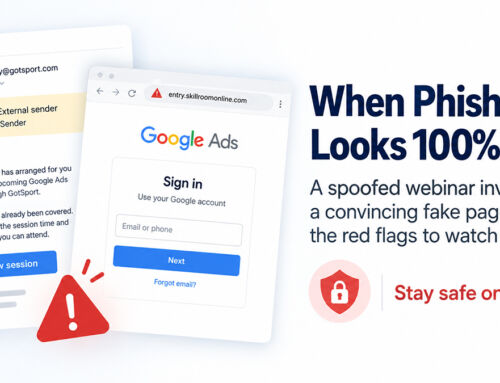
When you’re worried about losing enquiries, an agency’s sales pitch can hit a nerve. Digital marketing agencies are competing for your budget too. Repeated calls and warnings about being left behind can turn a business concern into pressure to sign.
“You’re falling behind.” “Your competitors are taking your customers.” “You need to act now.”
Claims like these need evidence. Ask what the agency has checked and how the proposed work would address the issue. One search screenshot can show where you appeared for that search. It cannot tell you how many customers you lost or what another business earned.
Before agreeing to a proposal, ask what supports the claim:
| Example sales claim | What you should ask |
|---|---|
| “Your competitors are taking your customers.” | What evidence shows why customers chose them? |
| “You’re missing from AI search.” | Which platforms, questions and dates did you check? |
| “You need this marketing package.” | Which findings support the work you recommend? |
| “You need to decide today.” | What specific issue or deadline requires that? |
Also confirm who will do the work, what the fee covers, any extra charges, the length of your commitment and how progress will be measured.
Google’s advice on choosing an SEO provider also recommends checking previous work, expected results and how success will be measured. It says no one can guarantee first place on Google.
I’d want those answers before deciding. If the urgency rests on what you might be losing, ask how that estimate was calculated. You should be able to understand the proposed work and its value before agreeing to it.
If a pitch has left you unsure where your business stands, Net Branding can help you review the findings and decide what needs attention. Ask us the same questions.
Frequently asked questions
Why are customers choosing my competitors?
They may find them more easily, understand the offer more quickly or see stronger evidence that the service suits them. Price, availability and response times also influence the choice. Review what happens from finding your business through to making an enquiry and receiving a reply.
How can I find out why customers choose a competitor?
Compare the service information, reviews and contact process customers can find for each business. Check your enquiry records and ask for feedback where appropriate. These give you a better basis for understanding the choice than assuming every customer decided on price.
Why does my competitor appear above me on Google?
For local results, Google explains that relevance, distance and prominence affect rankings. Results vary by the search and the searcher’s location. Review your Business Profile and website information for the services and locations you want to attract enquiries from.
Is SEO still useful with AI search?
Yes. Google confirms that SEO remains relevant to its AI search features. Useful content and a website its systems can access support discovery. AI platforms work differently, and visibility in one answer does not establish how your business appears across every platform or question.
Do I need to spend more on advertising?
Possibly. First check what happens to your current visitors and enquiries. If customers struggle to understand the offer or contact you, address those problems as part of your spending decision. Look at the suitability of enquiries as well as the number.
How can I assess a digital marketing sales pitch?
Ask for findings specific to your business, the work proposed, full costs, the length of the commitment and how progress will be measured. Find out who will do the work. If you’re unsure where your visibility needs attention, speak with Net Branding.
About the author, Cathy Mellett
Cathy Mellett is the Founder and Director of Net Branding, a New Zealand digital agency established in 2008. She has more than 30 years of experience in IT and digital communications.
Her work covers websites, SEO, digital advertising, social media, reviews, analytics and AI visibility. She helps businesses explain their services and make them easier for potential customers to find and assess.