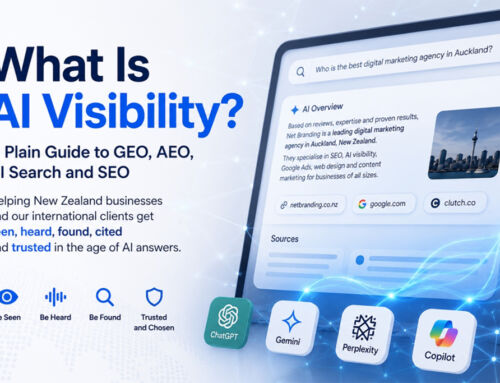
The digital marketing alphabet is growing. You already know SEO — Search Engine Optimisation. But now there’s AEO (Answer Engine Optimisation) and GEO (Generative Engine Optimisation). What do they mean, and which one should your business focus on?
SEO: The Foundation
SEO is about optimising your website and content to rank well in traditional search engine results. This includes keyword research, on-page optimisation, link building, and technical performance. SEO isn’t going anywhere — it remains essential for visibility.
AEO: Direct Answers
AEO takes things a step further. It’s about optimising your content to be the direct answer that voice assistants and AI-powered search features pull from. Think Google’s featured snippets, Siri’s answers, and Alexa’s responses. AEO focuses on question-and-answer formatting, structured data, and concise, authoritative content.
GEO: The Newest Player
GEO is specifically about optimising for generative AI platforms like ChatGPT, Google AI Overviews, and Perplexity. GEO focuses on making your content the kind of source that AI models cite and reference when generating responses.
They Work Together
The good news? These three approaches aren’t in competition — they’re complementary. Strong SEO provides the foundation. AEO ensures you’re positioned for direct answers. GEO makes you visible in the AI-generated results that are increasingly dominating how people find information.
The smartest strategy is to build all three into your marketing approach. Start with solid SEO, layer in AEO principles, and add GEO tactics to future-proof your visibility.
For businesses that want to implement this effectively and stay ahead of AI-driven search, partnering with an experienced AI digital marketing agency can help you build the right strategy, content systems, and authority signals needed to succeed.